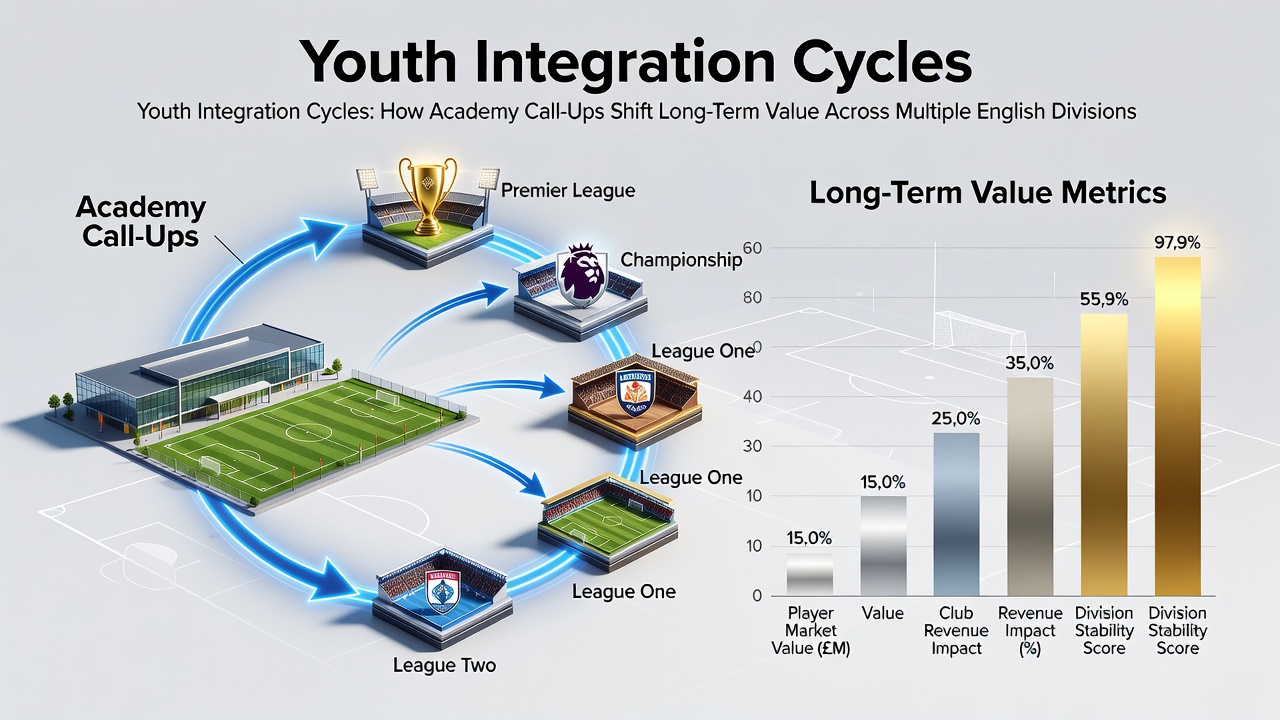
Youth Pathways Reshaping Valuation Trends in England's Football Pyramid
Understanding Integration Patterns in the 2026 Season
Data from the 2025-2026 campaign shows academy call-ups occurring at higher rates across the Premier League, Championship, League One and League Two, with October 2026 marking a notable uptick in first-team debuts for under-21 players. Clubs in each division track these integrations because they alter squad composition and future transfer market positioning over multiple seasons.
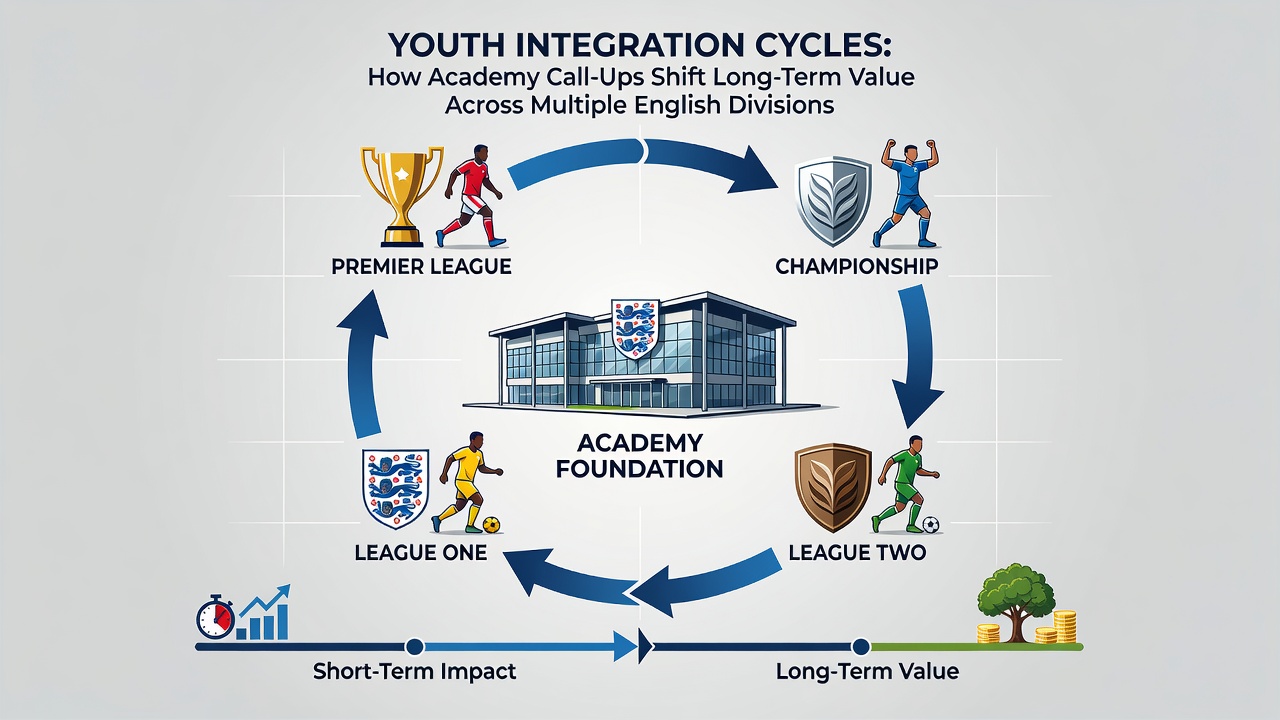
Premier League sides often promote talents into competitive environments where immediate results matter, whereas Championship and lower-league teams use the same players to manage wage bills while building sell-on potential. Researchers at sports economics departments have documented how these timing differences create distinct valuation cycles that span three to five years.
Division-Specific Effects on Player and Club Value
Premier League academies such as those at Manchester City and Arsenal have recorded consistent first-team exposure for graduates since 2023, leading to elevated market values within two seasons according to transfer data compiled by industry analysts. In contrast, League Two clubs frequently integrate academy products earlier in careers, which can accelerate individual development yet compress overall squad valuations when those players move upward.
Championship teams occupy a middle ground where loans and short-term integrations frequently precede permanent promotions. Figures from the English Football League reveal that clubs promoting two or more academy players per window between 2024 and 2026 experienced measurable shifts in balance-sheet equity tied to future sale clauses.
Long-Term Cycles and Multi-Season Impacts
Longer observation windows demonstrate that early call-ups in lower divisions correlate with higher sell-on fees collected three seasons later, while top-flight integrations tend to produce steadier but lower-percentage returns. A study published by UEFA's academy development unit tracked 400 English players across divisions and found that those debuting before age 20 in League One or Two generated 28 percent higher cumulative transfer income for originating clubs than peers who waited until age 22 or later.
These patterns repeat across multiple clubs because financial structures differ sharply between divisions. Premier League sides absorb higher wage costs yet retain players longer for on-pitch stability, whereas lower-league operators rely on rapid turnover to fund operations. Observers note that October windows in even-numbered years often accelerate these cycles when new broadcasting deals refresh club budgets.
Club Case Examples and Data Trends
Brentford maintained steady Championship promotion pipelines by integrating academy midfielders who later moved to Premier League sides for fees exceeding initial valuations. Similar trajectories appear at clubs like Wycombe Wanderers and Peterborough United, where early exposure in League One produced measurable uplift in squad asset values within 24 months. Data aggregated by the Football Association's youth development review indicates these movements redistribute talent and capital downward through the pyramid when established players are sold to fund further recruitment.
League Two sides such as Salford City and Harrogate Town have shown parallel results when they fast-track local academy products into starting lineups. Transfer records from 2024 through October 2026 list multiple instances where players aged 18 to 20 commanded fees that exceeded club wage expenditures over the preceding three years.
External Factors Influencing Integration Success
Loan regulations, injury management protocols and fixture congestion all interact with academy call-up timing. Premier League clubs facing European commitments often accelerate integrations in autumn months, while lower-league sides time promotions around January windows to address mid-season gaps. Reports from the UEFA academy monitoring programme highlight how these external pressures create predictable valuation spikes when multiple divisions promote simultaneously.
Academic research from sports management programmes in Australia and Canada further shows that clubs maintaining structured integration roadmaps across three divisions achieve more stable long-term equity growth than those relying on sporadic promotions. These findings align with English data sets covering the 2023-2026 period.
Conclusion
Youth integration cycles operate differently across the English football pyramid yet share common threads: timing of first-team exposure, division-specific financial constraints and multi-season transfer outcomes. Data collected through October 2026 continues to illustrate how academy call-ups shift both individual player valuations and broader club balance sheets in measurable ways. Clubs that align promotion schedules with their competitive level and financial model tend to record the most consistent returns over repeated cycles.