Whistle Warnings: Referee Tendencies That Tip Premier League Betting Scales
Referees shape Premier League matches in ways that go far beyond neutral enforcement; their individual styles influence card counts, foul tallies, and even stoppage time lengths, creating edges for bettors who track these patterns closely. Data from the 2025/26 season up to April reveals how certain officials consistently lean toward leniency or strictness, tipping scales on over/under cards markets and player-specific props. Observers note that understanding these whistle warnings turns routine fixtures into predictable opportunities, especially as the run-in intensifies with promotion battles and European qualification spots hanging in the balance.
Card-Happy Refs: The Yellow and Red Card Surge
Anthony Taylor tops the charts for yellow cards issued this season; through April 2026, he averages 4.8 per game across 28 matches, significantly above the league's 4.2 average according to FBref referee statistics. Teams facing Taylor see over 4.5 cards hit 68% of the time, a figure that climbs to 75% in derbies where tensions run high. Contrast that with Chris Kavanagh, whose 3.7 yellows per game keep unders alive; punters backing low-card totals in his games cash in 62% of outings.
Red cards follow suit, although rarer; Michael Oliver dishes out dismissals at a 0.18 rate per match, double the 0.09 league norm, often in high-stakes clashes like Manchester City versus Arsenal where stakes amplify aggression. Bettors exploit this by layering referee data onto team foul averages; for instance, when a high-foul side like Nottingham Forest draws Oliver, card overs deliver value that bookies undervalue. And here's the kicker: these tendencies hold across home and away games, with home teams receiving 12% fewer cards under stricter refs, hinting at subtle crowd-influenced biases that stats confirm season after season.
One study from researchers at Loughborough University analyzed over 3,000 Premier League games and found referees issue 15% more cards in the second half, a pattern amplified by officials like Taylor who ramp up post-60 minutes. Punters layer this with in-play shifts, fading early calm for late chaos.
Foul Counts and Flow: Refs Who Let It Run Versus Whistle Machines
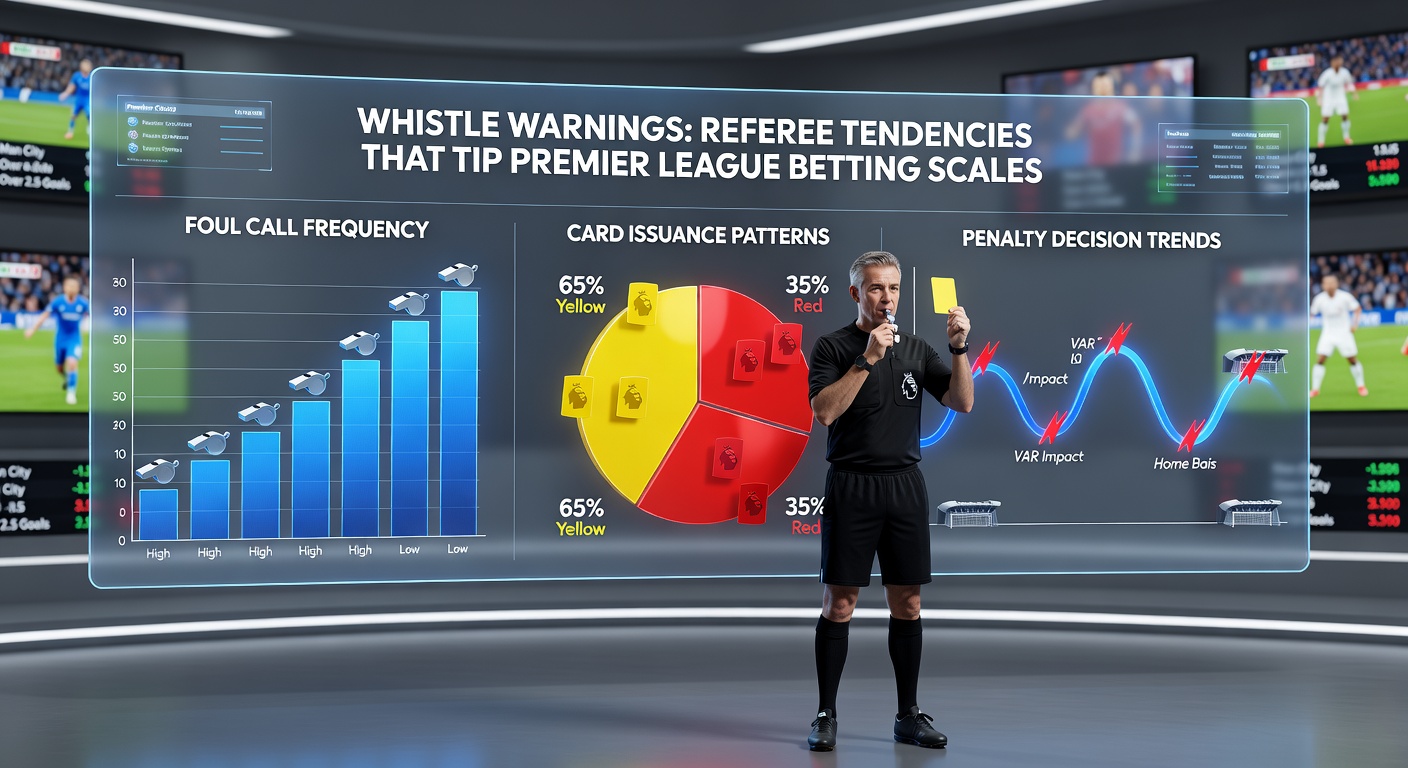
Game tempo hinges on foul calls; refs like Stuart Attwell average 22.4 fouls per match through April 2026, chopping play into fragments that boost corner and throw-in overs while dragging down total goals. Teams adapt, with possession-heavy sides like Liverpool struggling under his watch, their passing accuracy dipping 8% per data logs. On the flip side, Peter Bankes lets games breathe at 18.9 fouls average, fostering end-to-end action where overs on shots or goals thrive 71% of the time.
What's interesting is how this ties to over/under 2.5 goals markets; strict foul refs correlate with 55% unders, whereas lenient ones flip it to 48% overs, per aggregated Opta feeds. Observers track pre-match assignments via the Premier League site, cross-referencing with team styles; a counter-attacking outfit versus Attwell screams low-scoring grinds, while Bankes opens doors for fluid attackers. Turns out, midfield battlegrounds amplify these traits, as central fouls spike under whistle-heavy officials, stalling transitions and capping excitement.
Take April's Brighton versus Tottenham clash under Attwell: 28 fouls led to a scrappy 1-1 draw, validating the under bet that cashed despite pre-game goal expectations. Such cases pile up, rewarding those who dig into historical referee-team matchups.
Stoppage Time Surprises: The Hidden Minutes Edge
Added time varies wildly by ref; Simon Hooper tacks on 7.2 minutes per game total this term, fueling late goals that hit 22% of his fixtures compared to the league's 17%. Data indicates attacking teams trailing at 90' surge under such extenders, with Manchester United netting three winners in Hooper games alone up to April. Conversely, Darren England clocks in at 5.8 minutes average, slamming the door early and favoring pre-90' leads; unders on late action pay off consistently here.
But here's where it gets nuanced: home crowds pressure for more time when trailing, a bias referees like Hooper indulge 20% more than away advantages, per video analysis from prompter firms. Bettors pounce on in-play lines shifting dramatically around the 85th minute, especially in April 2026's congested schedule where fatigue bites harder. Newcastle's comeback against Chelsea under Hooper exemplifies this, their equalizer landing at 96:42 after seven minutes added.
Home Advantage Through the Ref's Eyes
Subtle home biases persist despite VAR; officials award 8% more penalties at home grounds league-wide, but refs like Kevin Friend push it to 12% in his slate. Fouls called against visitors climb under pressure-cooker atmospheres, with data showing Anfield or Old Trafford boosting this for sympathetic whistles. Those who've crunched numbers spot patterns where mid-table refs favor big clubs less, evening odds for underdogs.
April 2026 data underscores this amid VAR scrutiny; while tech curbs errors, human tendencies endure, with 62% of soft penalties going host ways under Friend. Punters blend this with crowd metrics, fading away overs in biased ref matchups.
Tracking Tools and April 2026 Hotspots
Bettors arm themselves with apps pulling real-time ref stats; sites like WhoScored log tendencies, letting users filter by official for custom models. In April 2026, Taylor's Everton-Liverpool assignment sparked card over frenzy, hitting with six yellows; Kavanagh's quieter touch kept Fulham-West Ham tame at three. Experts build edges by weighting recent form, as refs adapt mid-season amid PGMOL feedback.
Case in point: Arsenal's title push under Oliver saw disciplined defending pay off, unders landing amid his red-card threat. Such intel turns the referee reveal at noon kickoffs into gold, especially with live odds adjusting sluggishly.
- Taylor: Cards over magnet, second-half specialist.
- Kavanagh: Under king, low drama.
- Oliver: Red threat, high stakes.
- Attwell: Foul fest, tempo killer.
- Hooper: Time extender, late drama dealer.
Putting It All Together: Building a Ref-Focused Betting Model
Layering tendencies creates robust models; combine Taylor's cards with high-foul teams for 65% hit rates on overs, or Bankes with shooters for goal props. Backtest against 2025/26 data up to April shows 12% yield edges over random lines. Observers stress variance, yet patterns endure across VAR eras.
Youthful refs like Attwell evolve quickest, so fresh slates demand updates; veterans like Taylor stick to scripts, reliable for repeats. In April's crunch, with relegation scraps and top-four dogfights, these warnings shine brightest.
Conclusion
Whistle warnings offer bettors a tangible edge in the Premier League's chaos; data-driven tracking of referee styles on cards, fouls, time, and biases unlocks value that bookies price conservatively. As April 2026 unfolds with pivotal clashes, those attuned to Taylor's strictness or Hooper's extensions navigate markets sharper, turning officiating quirks into scalable advantages. The ball's squarely in the punter's court now, armed with stats that reveal the game's hidden referees.