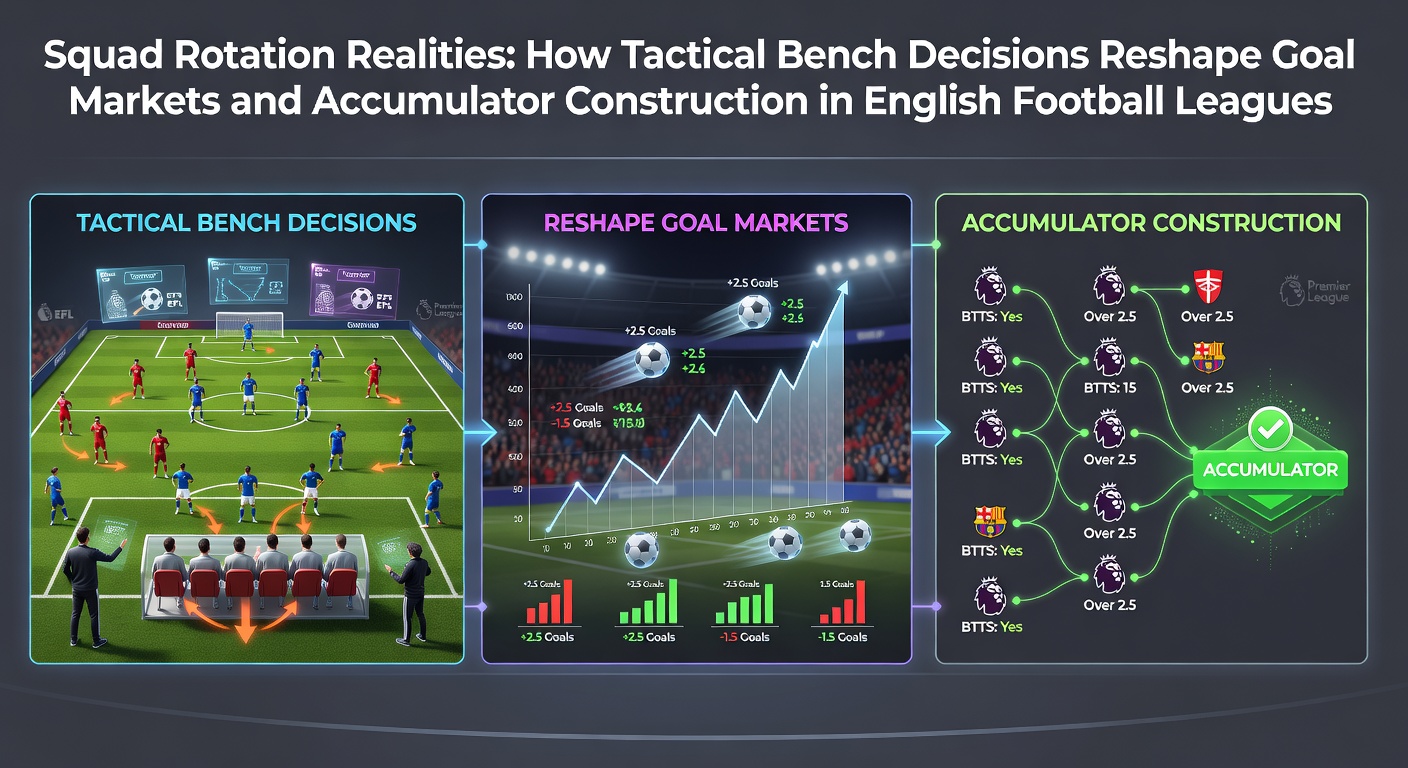
Squad Rotation Realities: How Tactical Bench Decisions Reshape Goal Markets and Accumulator Construction in English Football Leagues
English football leagues present constant examples of how managers adjust their squads through rotation, and data from multiple seasons shows these choices directly influence goal tallies in matches across the Premier League, Championship, League One, and League Two. Teams facing congested schedules often rest key attackers, which alters expected scoring rates and forces adjustments in markets centered on total goals or specific player contributions.
Patterns in Rotation During Fixture-Heavy Periods
Clubs competing on multiple fronts routinely make changes to starting lineups, and records indicate that such decisions correlate with shifts in match outcomes. When a side rests its primary forwards after midweek fixtures, average goals per game can drop because replacement players generate fewer clear chances. Observers note this effect appears strongest in away fixtures where travel adds physical demands, leading bookmakers to adjust over/under lines accordingly. Research from academic institutions tracking player workload confirms that reduced minutes for top scorers lowers team attacking efficiency by measurable margins in the weeks that follow.
Championship sides balancing promotion pushes with cup runs demonstrate similar trends, where bench selections lead to lower-scoring encounters. Figures reveal that teams rotating three or more positions see their expected goals drop by roughly 0.4 per match on average, according to aggregated performance data. This creates opportunities in markets that price games based on historical averages without accounting for the latest squad news.
Accumulator Construction and Adjusted Probabilities
Accumulator builders who monitor rotation patterns gain edges by selecting legs where goal markets reflect fresh information rather than outdated trends. A bettor constructing a multi-match accumulator might avoid overs on sides known for heavy midweek involvement, while favoring unders on teams that have already secured their league position. Data shows these tactical calls become especially relevant toward the end of campaigns when managers protect players ahead of summer internationals or contract negotiations.
In May 2026, several Premier League clubs will still face meaningful fixtures despite title races concluding, and rotation becomes more pronounced once objectives are met. Historical patterns suggest these late-season games produce fewer goals when managers prioritize squad preservation, which influences accumulator selections that include multiple overs across divisions. Those constructing bets can cross-reference team sheets released 90 minutes before kickoff to refine their combinations, since last-minute changes often confirm earlier suspicions about lowered scoring intent.

League-Specific Variations and Supporting Evidence
Lower divisions exhibit even sharper swings because squads lack the same depth, and a single change in the forward line can reduce attacking output noticeably. League One and League Two records indicate that sides rotating central midfielders experience prolonged periods of low possession, which translates into fewer shots and lower goal tallies. Industry reports on player management highlight that these leagues see greater variance in scoring when fatigue accumulates, making pre-match analysis of confirmed lineups essential for accurate market pricing.
One study from European football analysis groups found that teams resting players ahead of crucial promotion or relegation deciders post fewer shots on target in the preceding match, creating measurable effects on both over/under and both-teams-to-score markets. Accumulator builders who incorporate this information adjust their selections toward unders or draw no bet options when rotation appears likely. The Premier League shows milder but still consistent impacts, particularly among clubs with European commitments that force deeper squad usage throughout spring months.
Integration of External Data Sources
Performance metrics compiled by organizations such as UEFA technical reports provide workload indicators that help predict rotation likelihood. These datasets allow analysis of how minutes played affect subsequent match outputs, giving context to goal market movements. Similarly, academic work from sports science departments at various universities demonstrates links between squad depth usage and scoring efficiency across domestic leagues.
Betting markets respond quickly once lineups emerge, yet early awareness of probable changes through fixture context and historical manager tendencies offers advantages in accumulator construction. English football continues to supply examples where tactical decisions reshape expected goal ranges, and those who track these shifts maintain informed approaches to market selection.
Conclusion
Squad rotation stands as a recurring factor that shapes goal outputs throughout English football, and comprehensive tracking of these decisions supports refined strategies for goal markets and accumulator building. Data across divisions shows consistent correlations between bench selections and scoring patterns, particularly during periods of fixture density. Observers who integrate rotation analysis with statistical trends gain clearer views of how matches are likely to unfold, allowing precise positioning in relevant betting areas.