Seasonal Squad Depth Mapping Reveals Midweek League Value Opportunities
Football analysts track squad depth variations throughout the campaign because these patterns directly influence performance in midweek fixtures, where fixture congestion often amplifies the effects of rotation and fatigue. Teams in the Premier League and Championship adjust their selections based on European commitments, domestic cups, and recovery cycles, creating measurable shifts in available personnel that data providers record season after season.
Understanding Squad Depth Across Phases of the Season
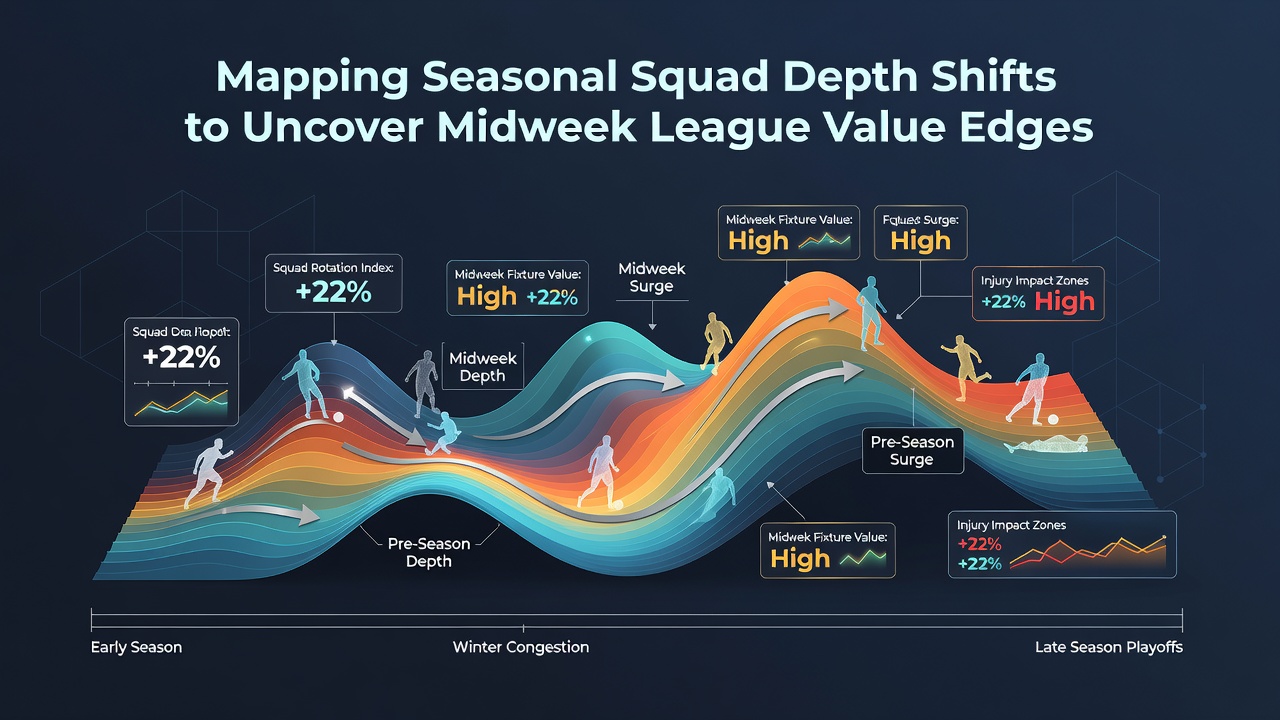
Early season months feature near-full squads as managers integrate new signings and manage pre-season workloads, yet by October and November the first waves of injuries and suspensions begin to thin options. Mid-season periods, particularly around the January transfer window, introduce fresh players who alter depth charts in specific positions, while late-season stretches see increased rotation as title races, European qualification, and relegation battles intensify. Researchers at sports analytics firms compile these changes into positional depth metrics that show how many reliable alternatives exist beyond the starting eleven.
Data from the 2025/26 campaign illustrates how clubs with shallow benches in central midfield experience steeper performance drops during December and March clusters of midweek games. Those who studied squad utilization patterns note that teams averaging fewer than three quality substitutes in key roles concede higher expected goals against in such windows, a trend consistent across multiple European leagues.
How Midweek Fixtures Amplify Depth Shifts
Midweek league matches often follow or precede European ties, forcing managers to manage player minutes more aggressively. A side that fields a near-identical lineup on Saturday may rest two or three starters for the Tuesday or Wednesday fixture, resulting in altered pressing intensity and set-piece execution. Observers note that these adjustments produce distinct betting market movements once lineups are confirmed, with odds on total goals and both-teams-to-score reflecting the reduced attacking output from rotated units.
Take one Premier League side that reached the Champions League quarter-finals in 2025/26; their league results on midweek dates showed a 0.4-goal decline in expected goals scored when two regular forwards were rested. Championship clubs with European or cup distractions exhibit similar patterns, though their thinner resources make the impact more pronounced. Figures from performance tracking platforms reveal that such rotations correlate with higher draw rates in those specific slots.
Data Sources and Tracking Methods
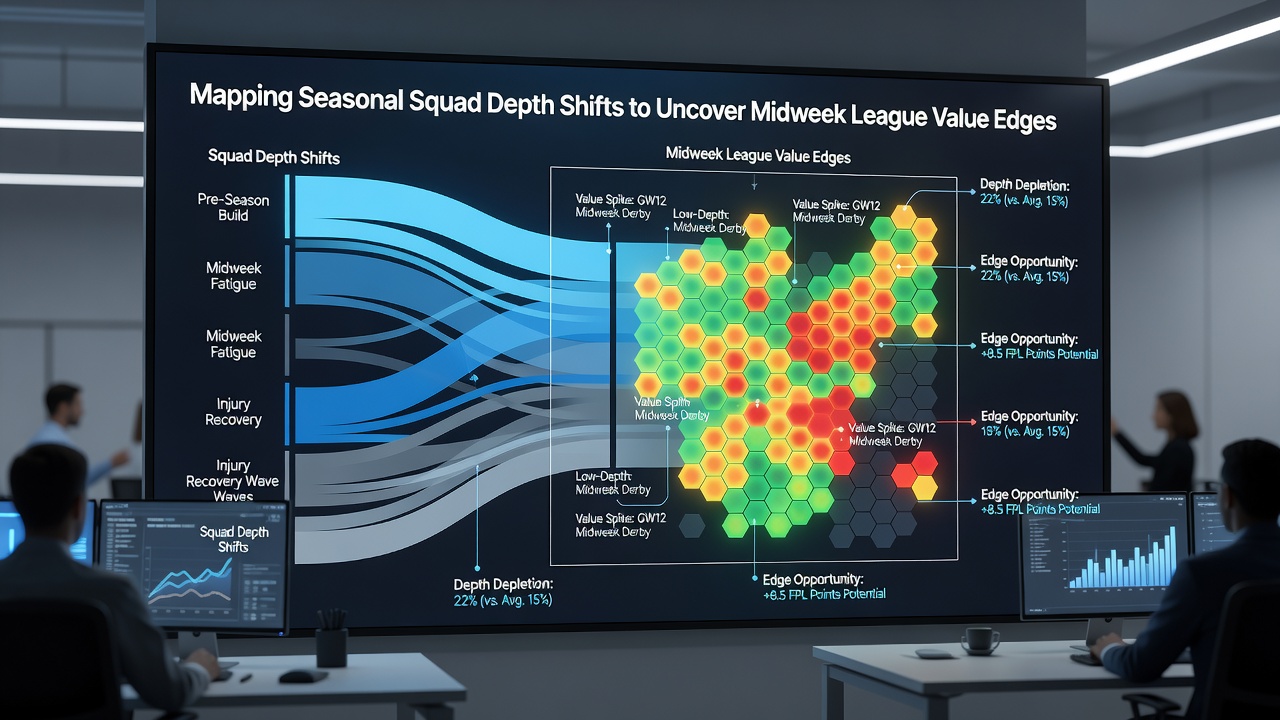
Performance databases aggregate minutes played, substitution timings, and injury reports to build seasonal depth profiles. These profiles assign depth scores to each position, updating weekly as transfers, loans, and recoveries occur. Analysts cross-reference these scores against historical midweek results to identify edges where market prices lag behind actual squad strength changes. According to reports from Stats Perform, clubs that maintain above-average depth in defensive lines throughout February and March post stronger clean-sheet percentages in midweek league games than those whose depth drops below seasonal averages.
June 2026 marks the start of pre-season planning for the 2026/27 campaign, when recruitment strategies directly shape the depth maps that will govern the following winter schedule. Clubs that address identified positional weaknesses during this window often stabilize their midweek outputs earlier than peers who delay reinforcements.
League-Specific Patterns in Rotation Impact
Premier League teams involved in multiple competitions display the clearest rotation signals, yet Championship sides balancing promotion pushes with cup runs show comparable effects on a smaller scale. Data indicates that promoted teams entering the top flight frequently underestimate the toll of additional midweek travel, leading to sharper depth erosion by the first international break. In contrast, established sides with larger squads absorb these demands more evenly, producing steadier outputs that betting markets sometimes over-adjust after a single poor midweek result.
Those who've examined multi-season datasets find that the correlation between squad depth scores and midweek points-per-game strengthens after the winter break, when accumulated fatigue compounds any roster gaps. External studies from institutions such as the Sports Science Institute support these observations by linking reduced squad options to measurable declines in high-intensity running metrics during congested periods.
Conclusion
Mapping seasonal squad depth shifts provides a structured approach to evaluating midweek league fixtures where rotation and recovery demands alter typical performance baselines. Consistent tracking of positional alternatives, combined with historical outcome data, allows analysts to isolate value opportunities that emerge once fixture lists and European schedules are known. As the 2025/26 season transitions into summer planning, these depth profiles continue to evolve, offering ongoing reference points for subsequent campaigns.