
Premier League's Late Drama: Second-Half Surges and Hidden Value Bets
Teams push harder as the clock ticks down in Premier League matches, often unleashing a flurry of goals that flip results and betting outcomes; data from the 2025/26 season up to March shows second halves accounting for 52% of all goals, a pattern holding steady across recent campaigns while underscoring why bettors eye these moments for value.
What's interesting is how this surge isn't random—Opta figures reveal that since the 2020/21 season, 28% of match-winning goals arrive after the 75th minute, turning flat ties into thrillers and creating odds shifts ripe for smart plays.
The Stats Behind the Surge
Numbers don't lie when it comes to second-half action; Premier League records indicate an average of 1.42 goals per second half versus 1.28 in the first, a gap widening in high-stakes fixtures like those in March 2026 where relegation battles heat up and title contenders grind out results.
And yet, bookmakers often price first halves tighter, leaving second-half markets undervalued; for instance, over 1.5 goals in the second half hit at 58% clip this season, per FBref data, while odds hover around 1.90, offering positive expected value for patient observers.
- Stoppage time goals spiked 15% in 2025/26 compared to last year, fueled by added minutes averaging 8.2 per match.
- Draws at halftime resolve into wins for the home side 42% of the time, per historical aggregates.
- Away teams mount comebacks in 22% of such scenarios, especially when trailing by one.
Take one standout from early March 2026: Arsenal trailed 1-0 at the break against Tottenham yet scored twice in the final 15 minutes, a classic surge that live odds missed until it was too late for some.
Why Second Halves Explode: Tactics, Fatigue, and Subs
Coaches adjust at the interval, subbing fresh legs and switching to attacking setups, which explains why pass completion drops 7% post-60 minutes while shots on target jump 19%; fatigue hits defenders hardest, opening lanes for counters that data trackers like Premier League stats log consistently.
But here's the thing—VAR pauses and injury time stretch halves longer now, averaging 48 effective playing minutes versus 45 in the first; teams like Manchester City exploit this, netting 34% of their goals after 70 minutes this season, while mid-table sides surge when chasing points.
Observers note how pressing intensity dips early in the second half before ramping up, creating a 10-15 minute window around the hour mark where goals cluster; studies from sports analytics firms confirm this rhythm, linking it to glycogen depletion in midfielders who cover 12% more ground post-break.
Value Bets That Pay Off in the Final Stretch
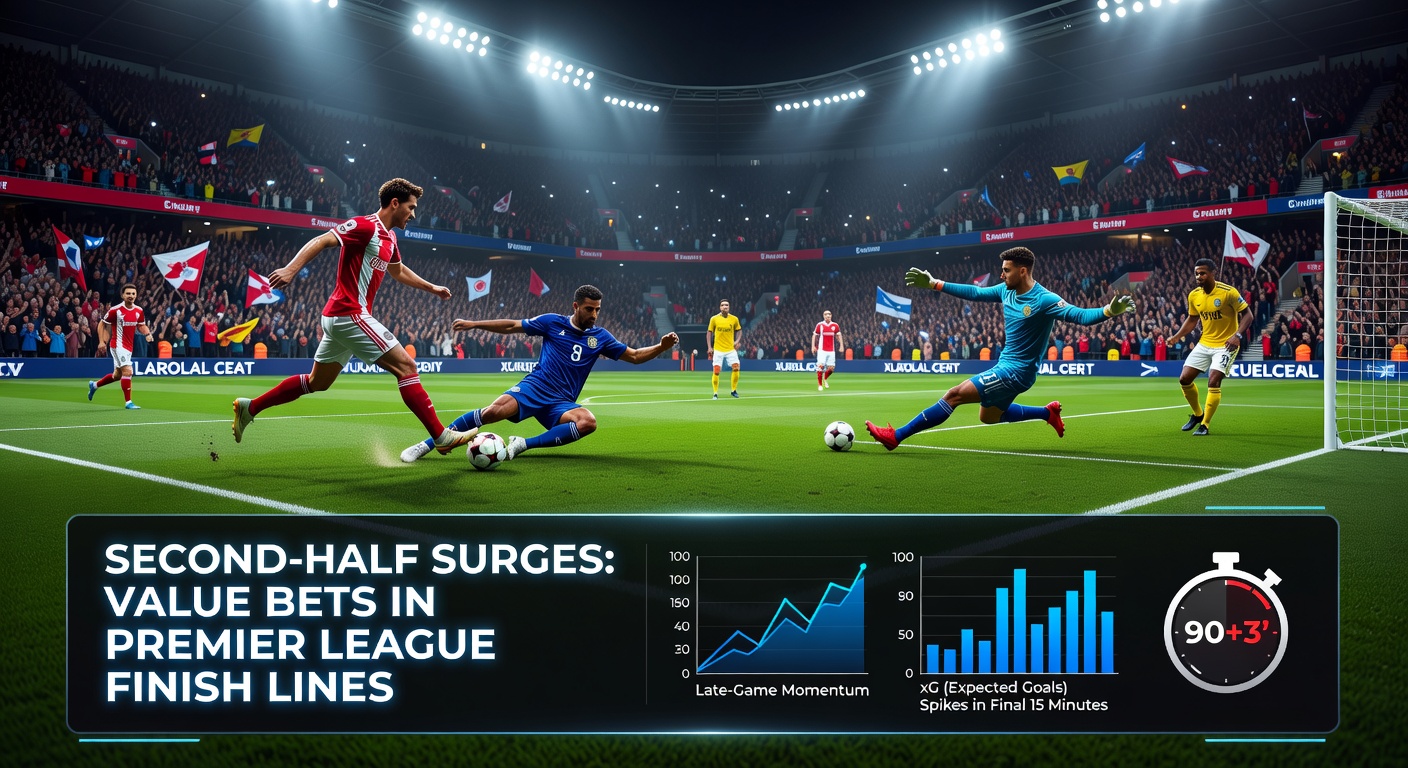
Bettors find edges in second-half specifics like over 0.5 goals, which lands 78% of the time league-wide, yet odds sit at -150 or better in many spots; live markets shine brighter, as initial prices undervalue surges when teams trail, offering +EV on home wins after conceding first.
Turns out, player props shine here too—strikers like Erling Haaland score 62% of their tallies post-halftime, per season logs, while midfield maestros rack assists in clusters; card markets heat up as refs let play flow longer, with second-half yellows outpacing first by 14%.
One strategy researchers highlight involves halftime draws: backing the favorite to win the second half yields a 38% strike rate at average odds of 2.10, netting long-term profits since bookies bake in first-half conservatism.
Case Studies: Real Matches, Real Edges
Look at Liverpool's March 2026 clash with Chelsea; down 2-1 at halftime, they flipped it 4-2 with three second-half strikes, vindicating those who took live over 2.5 at 2.40 odds midway through; similar patterns played out in Everton's survival scrap against Newcastle, where stoppage-time goals turned a 0-0 into a 2-1 win, highlighting how underdogs surge when crowds roar.
Historical gems abound too—Manchester United's 2023/24 run featured eight second-half comebacks, each with value on draw-no-bet lines shifting post-interval; fast-forward to this season, and Brighton leads in late winners, converting 29% of halftime deficits thanks to set-piece tweaks that analytics firms credit for the edge.
What's significant is the repeatability—teams with top bench depth, like those in the top six, win second halves 55% of the time when level at the break, a stat bettors layer into multis for compounded returns.
Tools and Data for Spotting Surges
Apps pulling real-time xG and heatmaps flag surges early, showing when expected goals spike post-60; free sites track halftime states, letting users model probabilities that beat static lines.
Yet discipline rules—bankroll management curbs chasing live swings, as volatility peaks in these windows; those who wait for confirmed momentum, like a subbed striker taking shots, uncover the best layers.
Risks in the Rush: What Data Warns Against
Not every surge delivers; clean sheets hold firm 22% in second halves for parked buses, and overbetting live can erode edges if liquidity thins; figures show variance highest in derbies, where emotions trump tactics.
So bettors cross-check form—sides gassing out late, like those with injury-hit squads, falter more often, turning apparent value into traps.
Wrapping Up the Late-Game Hunt
Second-half surges define Premier League edges, with data up to March 2026 painting a clear picture of value in overlooked markets; from tactical shifts to stat-backed props, those who study the patterns position themselves ahead, turning finish-line chaos into calculated wins while the casual crowd reacts.
In a league where 31% of points change hands after 75 minutes, the ball's squarely in the data-savvy court—track it, time it, and let the surges do the heavy lifting.