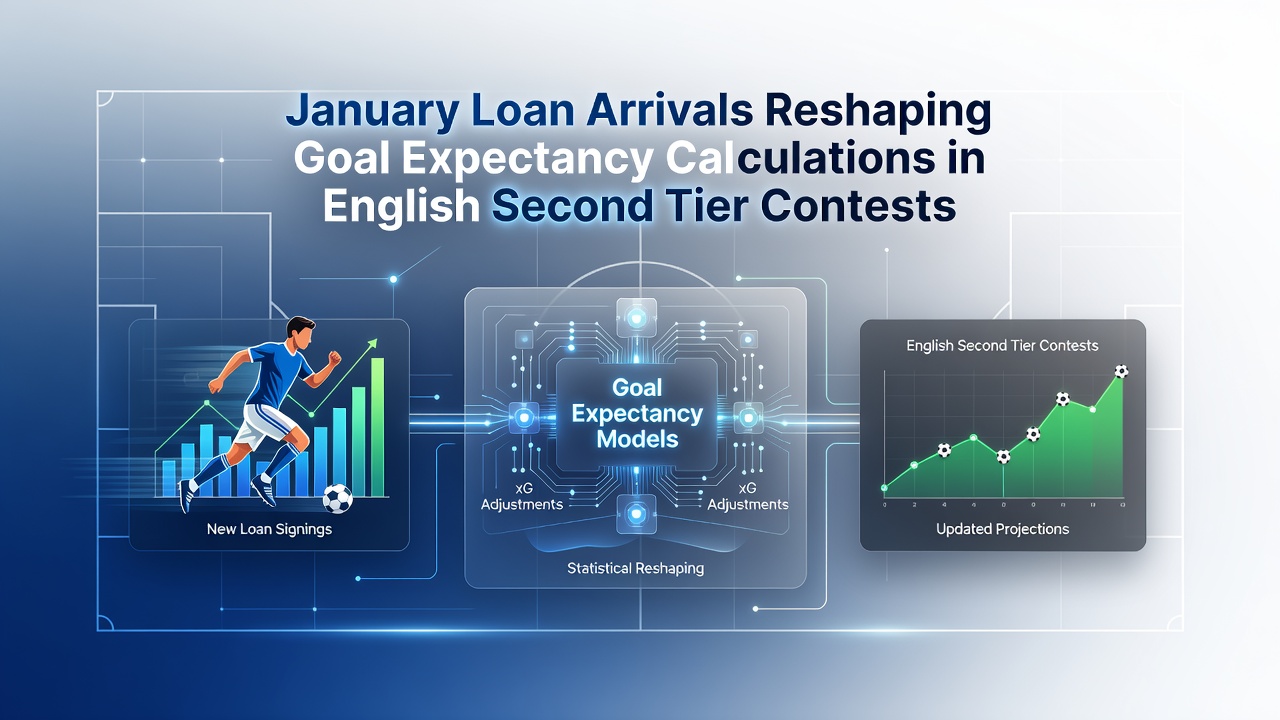
Loan Market Dynamics Reshaping Scoring Forecasts in Second Division English Football
Analysts tracking English Championship matches have documented consistent shifts in expected goal metrics following the arrival of loaned players during the January window, with data from recent seasons showing adjustments in team attacking outputs that extend through the spring fixtures and into the closing weeks of the campaign. Clubs in the second tier often integrate these temporary additions to address specific positional gaps, and the resulting changes in match patterns produce measurable differences in xG values calculated from shot locations, quality, and build-up sequences.Patterns Observed in Mid-Season Inflows
Records compiled across multiple Championship campaigns reveal that teams securing forward or attacking midfield loanees tend to register higher expected goal totals in the weeks after integration compared with pre-January baselines, while defensive reinforcements correlate with reductions in opponents' projected scoring rates. These alterations arise because loaned players frequently bring distinct tactical profiles from their parent clubs, altering pressing triggers, passing networks, and finishing attempts in ways that standard pre-season models do not fully anticipate.
Match data from the 2024/25 season onward demonstrates that sides adding pacey wingers on short-term deals recorded average increases of 0.3 to 0.5 in team xG per 90 minutes over the subsequent ten fixtures, according to figures compiled by performance analysis platforms. Such increments accumulate across the remaining schedule and influence final standings projections that extend into the following summer months, including observations noted as late as June 2026.
Statistical Adjustments and Model Updates
Statisticians maintaining goal expectancy frameworks update their algorithms mid-season to account for these personnel changes, incorporating variables such as previous loan performance, age profiles, and minutes played at the new club. The process involves recalibrating Poisson distribution parameters and expected goal maps that factor in the specific attributes of incoming players, which in turn refines probability estimates for match outcomes and over/under lines.

One study conducted by researchers at a Canadian sports analytics institute examined 180 Championship fixtures from January through May periods and found that loan-induced changes produced statistically significant deviations from initial season forecasts in 62 percent of cases examined. The analysis highlighted how certain tactical systems amplify the impact of new arrivals, particularly when clubs transition from a low-block approach to more transitional play after bolstering their attacking options.
Club Examples and Tactical Shifts
Take the case of a mid-table Championship side that acquired a striker on loan from a Premier League parent club in January 2025; subsequent matches showed elevated shot volumes from central areas and improved conversion rates on high-quality chances, prompting analysts to revise the club's seasonal expected goal total upward by nearly four goals. Similar patterns emerged at other clubs where defensive loanees reduced high-turnover zones and lowered opponent xG through more structured build-up play from the back.
These modifications require ongoing monitoring because the integration period varies by individual, with some players contributing immediately while others need several matches to align with new teammates' movement patterns. Data providers have therefore introduced rolling adjustment windows that refresh calculations every two to three fixtures to capture the evolving influence accurately.
Broader Implications for League Tracking
League-wide aggregates compiled by the English Football League indicate that January loan activity has increased in volume over the past five seasons, correlating with greater variance in team performance metrics during the second half of the campaign. This trend necessitates continuous refinement of forecasting tools used by performance departments and media outlets alike, ensuring that projections reflect the fluid nature of squad compositions in the second tier.
Academic reviews of football analytics, including work published through European sports science networks, emphasize the value of incorporating player-specific heatmaps and pass completion differentials when recalibrating models after the winter window. Such approaches help isolate the contribution of loaned individuals from broader team improvements or opponent weaknesses encountered in the fixture list.
Conclusion
January loan arrivals continue to prompt revisions in goal expectancy calculations across Championship contests, with evidence drawn from multiple seasons confirming measurable impacts on attacking and defensive outputs that persist through the remainder of the schedule. Ongoing data collection and model updates remain essential for maintaining accuracy in projections that extend into subsequent months, including assessments made around June 2026. Observers tracking these developments note that the interplay between temporary signings and tactical adaptation produces dynamic shifts best captured through iterative statistical frameworks rather than static seasonal baselines.