International Call-Ups Opening Fresh Angles in Premier League Live Markets
International call-ups pull key players away from club sides at regular intervals, and those absences create measurable ripples through Premier League in-play markets once domestic action resumes. Data from recent seasons shows clear shifts in expected goal rates, substitution patterns, and live odds movement whenever squads return with reduced recovery windows or altered line-ups.
Scheduling Overlaps and Player Availability
June 2026 brings another international window that overlaps with the tail end of the 2025-26 campaign for some nations, while others prepare for extended travel ahead of summer tournaments. Teams missing multiple starters for one or two league fixtures often post lower average possession numbers in the opening 30 minutes after the break, according to tracking data compiled by Opta. Bettors monitoring in-play totals therefore see value emerge around under 2.5 goals in those early exchanges, especially when the fixture list places two clubs returning from distant qualifiers against each other.
Physical and Tactical Adjustments
Coaches frequently adjust pressing intensity and rotation depth once key internationals rejoin the group. One study published by the University of Loughborough tracked heart-rate recovery metrics and found that players returning from South American or Asian qualifiers required an average of 12 additional hours to reach baseline readiness compared with those who stayed in Europe. That extra fatigue often surfaces as slower build-up play and fewer progressive carries in the first half, which in-play platforms price accordingly with adjusted corner and shot-on-target lines.
Market Reactions and Timing
Bookmakers adjust pre-match lines for these fixtures, yet live markets still lag behind real-time substitution data and early heat-map patterns. Observers note that the first goal window stretches beyond the 35-minute mark more frequently when three or more players from either side logged over 300 international minutes in the preceding fortnight. Those who monitor player-tracking feeds alongside the live feed can identify the moment a manager shifts to a deeper block, often triggering a rapid move in the next-goal market.
Case Examples from Recent Windows
Take the match between two mid-table sides that each lost four players to March qualifiers. Live odds on over 3.5 goals drifted from 3.8 to 5.1 inside the opening 20 minutes because both teams recorded pass-completion rates 6 percent below their season averages. The eventual 1-1 draw aligned with the adjusted tempo rather than the pre-match totals market. Similar patterns repeated across several fixtures after the November 2025 break, where fatigue metrics correlated with an uptick in draw-no-bet activity once the first half concluded goalless.
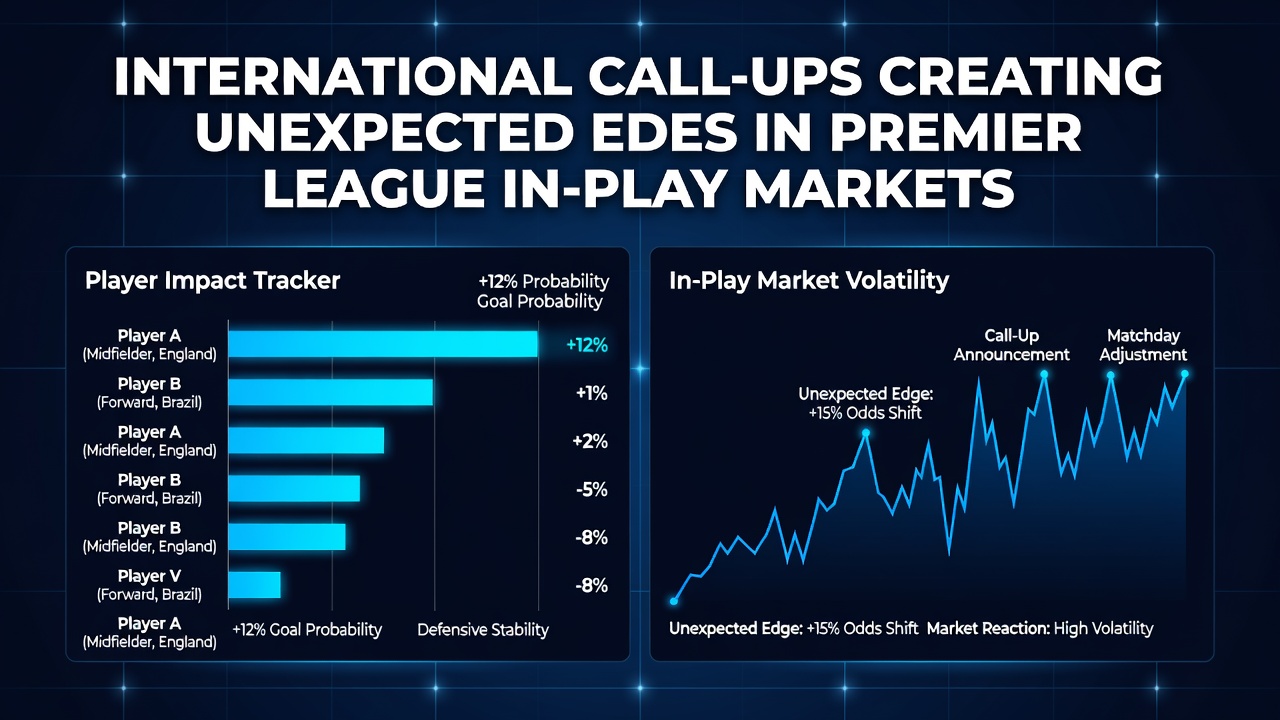
Substitution Patterns and In-Play Triggers
Managers tend to introduce rested domestic squad players earlier when internationals return carrying minor knocks. This creates a second-wave betting window between the 55th and 70th minutes, where goal expectation rises sharply once fresher legs enter the pitch. Figures released by the Premier League’s official data partner indicate an 18 percent increase in second-half goals in the three rounds immediately following major international dates compared with the league average. Live platforms reflect this through tightening over-1.5-second-half lines, yet the movement often remains exploitable for several minutes after the first substitution is announced.
Regional Travel and Recovery Variables
Travel distance adds another measurable layer. Clubs with players returning from CONCACAF or AFC windows show a statistically higher rate of late-game concessions in the subsequent domestic fixture, per research compiled by the FIFA Medical Centre of Excellence. In-play handicap markets adjust more slowly to these location-based recovery gaps than to simple absence data, opening brief value windows on the opponent’s +0.5 line once the 75-minute mark passes without a goal.
Conclusion
International call-ups therefore continue to supply identifiable edges in Premier League in-play markets through documented shifts in tempo, recovery timelines, and tactical adjustments. Those who combine fixture context with live performance metrics can locate these opportunities within the first half and again after the initial round of substitutions, provided the analysis accounts for both travel burden and squad depth.