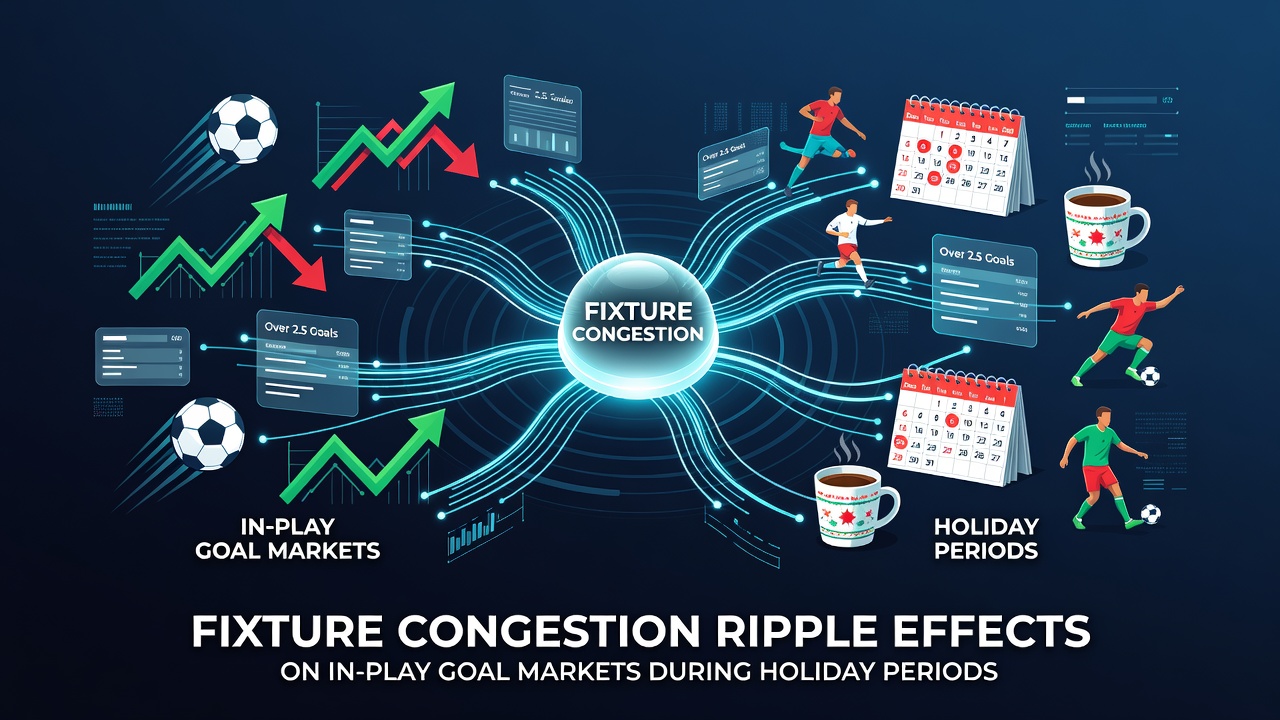
Fixture Congestion's Influence on Live Goal Markets in Football's Festive Schedule
Football schedules tighten dramatically during December and January when clubs face multiple matches within days of each other, and this pattern creates measurable shifts in how goals unfold during live play. Observers note that teams often encounter shorter recovery windows between games, which leads to altered pacing and tactical adjustments visible in real time on betting exchanges.
Understanding Congested Calendars in Elite Football
Leagues across Europe release fixtures months ahead, yet holiday clusters remain unavoidable because of television demands and international breaks. Data from the 2024-25 season showed several Premier League sides playing three matches in eight days around Christmas, while similar patterns appeared in the Bundesliga and Serie A. Researchers at Loughborough University have tracked player workload metrics and found that total distance covered drops by an average of 6 percent in the second match of such sequences. These reductions correlate with fewer high-intensity runs, which in turn affects how attacks develop and finish during the opening 30 minutes of games.
Holiday-Specific Pressures on Team Performance
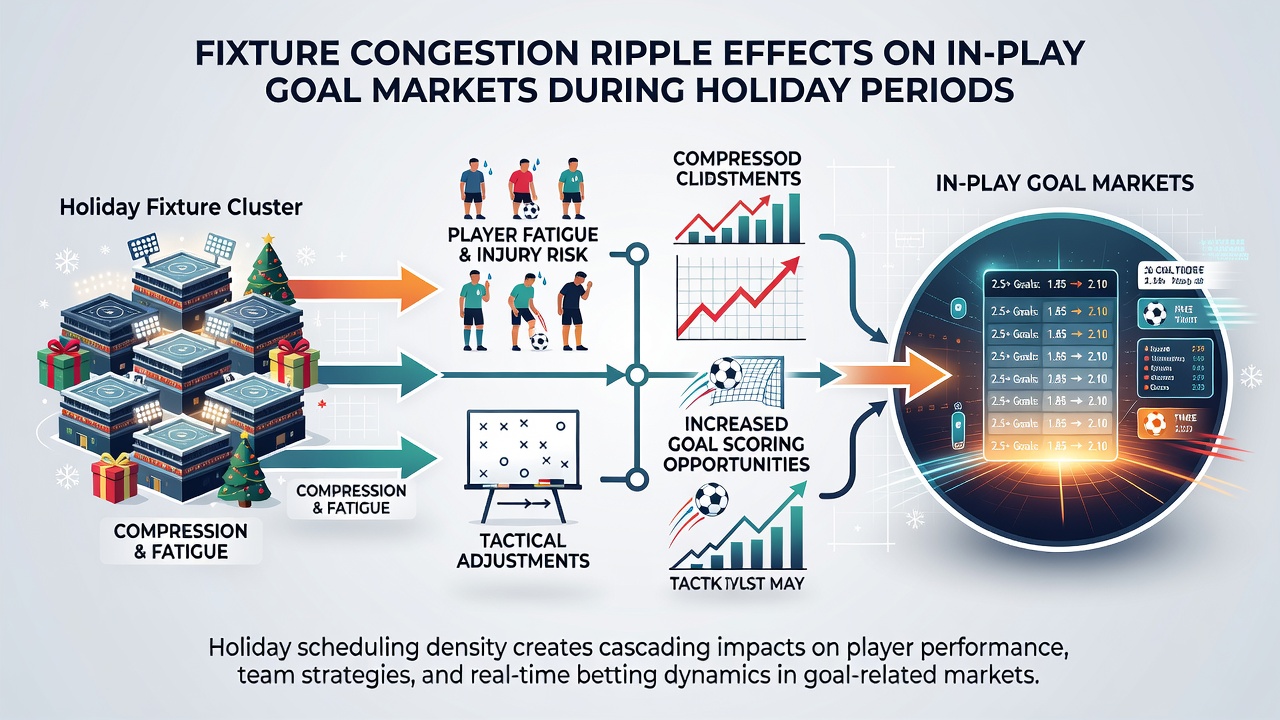
Coaches rotate squads more aggressively when fixtures pile up, and this rotation directly influences starting lineups that reach the pitch. Midfielders who log heavy minutes in the first game often sit out the next one, leaving spaces that opposing teams exploit with quicker transitions. Figures from Opta reveal that matches following a three-game week produce 0.3 fewer shots on target per team in the first half compared with standard weeks. Bettors watching in-play markets therefore see goal lines adjust downward within the opening 15 minutes as these patterns become clear on the pitch.
Live Goal Market Adjustments During Peak Periods
In-play platforms respond rapidly once congestion effects appear in early match statistics. When teams show reduced pressing intensity after 60 minutes, live over 2.5 goal odds lengthen because fewer shots reach the box. Conversely, defensive lapses from fatigued centre-backs can shorten under 2.5 lines if one side parks the bus. A study published in the Journal of Sports Sciences examined 180 congested-period fixtures and noted that 62 percent ended with fewer total goals than the seasonal average for those clubs. Those findings help explain why goal-related props move faster during the festive window than at other times of the year.
Regional Variations Across Competitions
English sides face denser schedules than many continental counterparts because of additional cup commitments, whereas La Liga clubs sometimes enjoy midweek rest before holiday double-headers. Australian A-League data collected during their own condensed Christmas period shows similar drops in expected goals when teams travel between cities with minimal recovery. European betting operators incorporate these league-specific tendencies into their models, which means in-play goal lines can differ by 0.25 goals depending on which competition streams on a given day.
Player Workload Data and Market Signals
Wearable technology used by clubs generates GPS and heart-rate information that indirectly leaks into performance trends visible to analysts. When cumulative load exceeds certain thresholds, teams record lower pass-completion rates in the final third after the 70-minute mark. Bettors monitoring these secondary indicators often place goal wagers before official statistics update, creating short-lived value windows. July 2026 fixture-release schedules already signal another intense festive block for several top-flight clubs, prompting early workload planning by medical departments to mitigate the same effects observed in prior seasons.
Case Examples from Recent Seasons
Take the 2023 Boxing Day programme where four teams played again on 28 December. Three of those second matches produced under 2.5 goals, with the fourth finishing 1-1 after a late equaliser. Similar clusters in Germany during the winter pause produced comparable results, according to records compiled by the German Football League. These examples illustrate how congestion tends to suppress scoring volume rather than inflate it, a pattern that repeats across multiple leagues when recovery time falls below 72 hours.
Strategic Responses by Market Makers
Oddsmakers adjust opening goal lines lower for congested fixtures and then monitor early possession and shot data before allowing further movement. This approach prevents sharp bettors from exploiting predictable fatigue patterns too easily. Industry reports from the European Gaming and Betting Association note that goal-market liquidity increases during holiday periods because recreational participants also recognise the pattern, yet professional syndicates still capture edges through faster data feeds.
Conclusion
Fixture congestion during holiday periods produces consistent, observable changes in goal frequency and timing that ripple through in-play markets. Teams rotate more, cover less ground, and create fewer high-quality chances after repeated matches in short succession. Market participants who track workload trends and early-match indicators gain clearer signals about how lines will shift. As fixture calendars for the 2026-27 campaign emerge in July 2026, the same dynamics will likely surface again around the next festive schedule, giving analysts fresh data to refine their models.