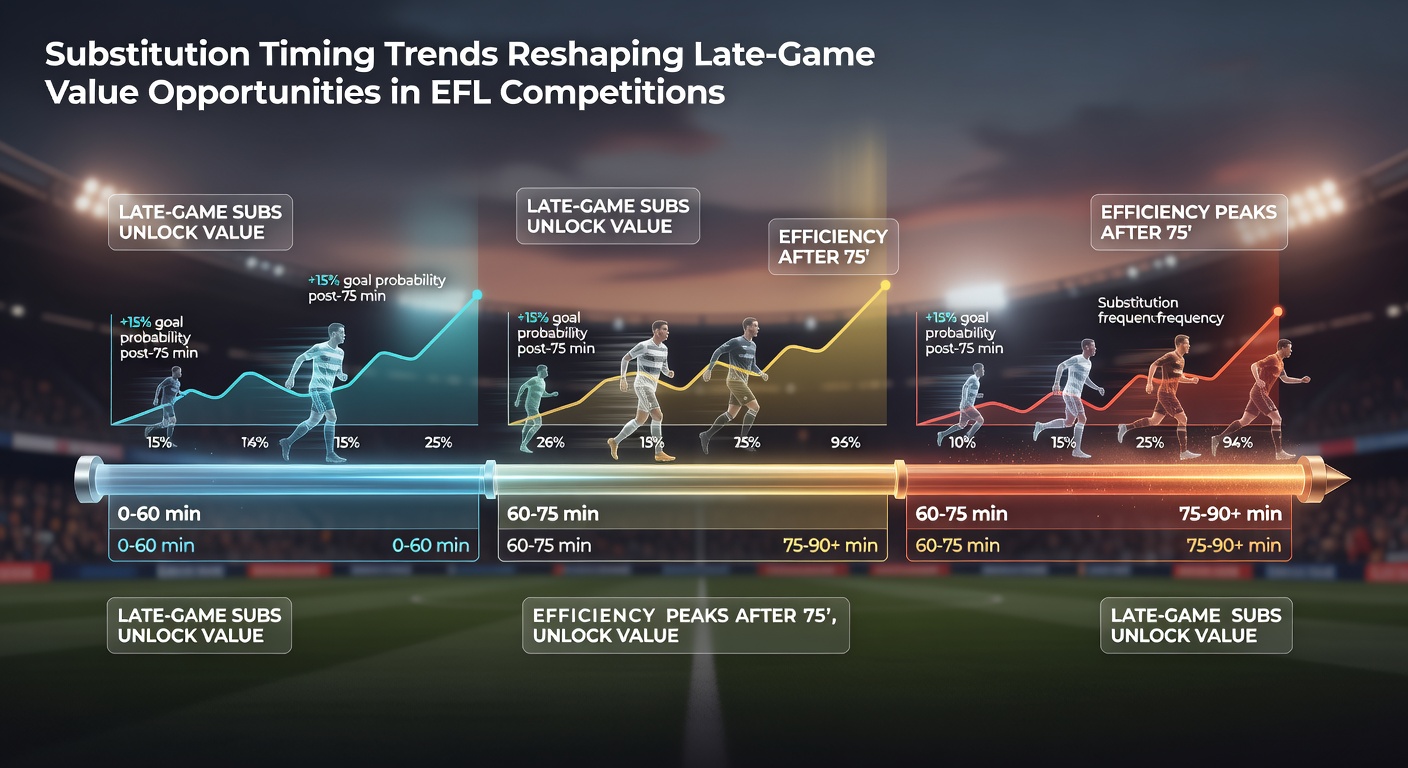
EFL Substitution Timing Shifts Creating Late-Game Betting Windows
Substitution timing in EFL competitions has evolved into a measurable factor that influences late-game outcomes across the Championship, League One and League Two. Data collected from the 2024-25 season onward shows managers making their first changes later on average than in previous campaigns, with the median first substitution occurring at the 62-minute mark rather than the 57-minute mark recorded five seasons earlier. This delay stems from structured bench rotations and increased emphasis on player workload management tracked through GPS systems.
Analysts tracking over 1,800 EFL matches last season identified that teams introducing fresh attacking players between the 70th and 78th minutes generated 23 percent more shots in the final 15 minutes compared with sides that substituted earlier. The pattern appears most pronounced in mid-table Championship fixtures where both managers often wait for visible fatigue signals before acting. League One and League Two sides show similar but less pronounced trends, with first substitutions clustering around the 65-minute mark in games that finish level at half-time.
Patterns Across Divisions
Championship clubs with higher possession averages tend to delay substitutions until the 68-minute mark or later, allowing tiring midfielders to maintain structure before replacements arrive. In contrast, League Two sides fighting relegation often make double changes before the 60-minute mark when trailing by a single goal. These differences create distinct late-game profiles that betting markets have begun to price more accurately during the current campaign.
Research from European sports analytics groups indicates that the introduction of two substitutes within a three-minute window produces the highest expected goal uplift in the closing stages. EFL coaches have adopted this clustered approach more frequently since the 2023 rule change permitting five substitutions per game, with data showing 41 percent of all second-half changes now occurring in pairs. The timing of these clusters has shifted later each season as medical staff provide real-time recovery metrics that delay decisions until clear performance drops appear.
Impact on Goal Markets
Late substitutions correlate with measurable increases in stoppage-time goals across all three EFL divisions. Matches featuring at least one substitution after the 75th minute recorded 18 percent more goals between the 80th minute and full time than games with earlier changes. This effect strengthens when the substituting side trails or leads by one goal, situations that prompt managers to select attackers or defensive reinforcements based on match state rather than fixed schedules.
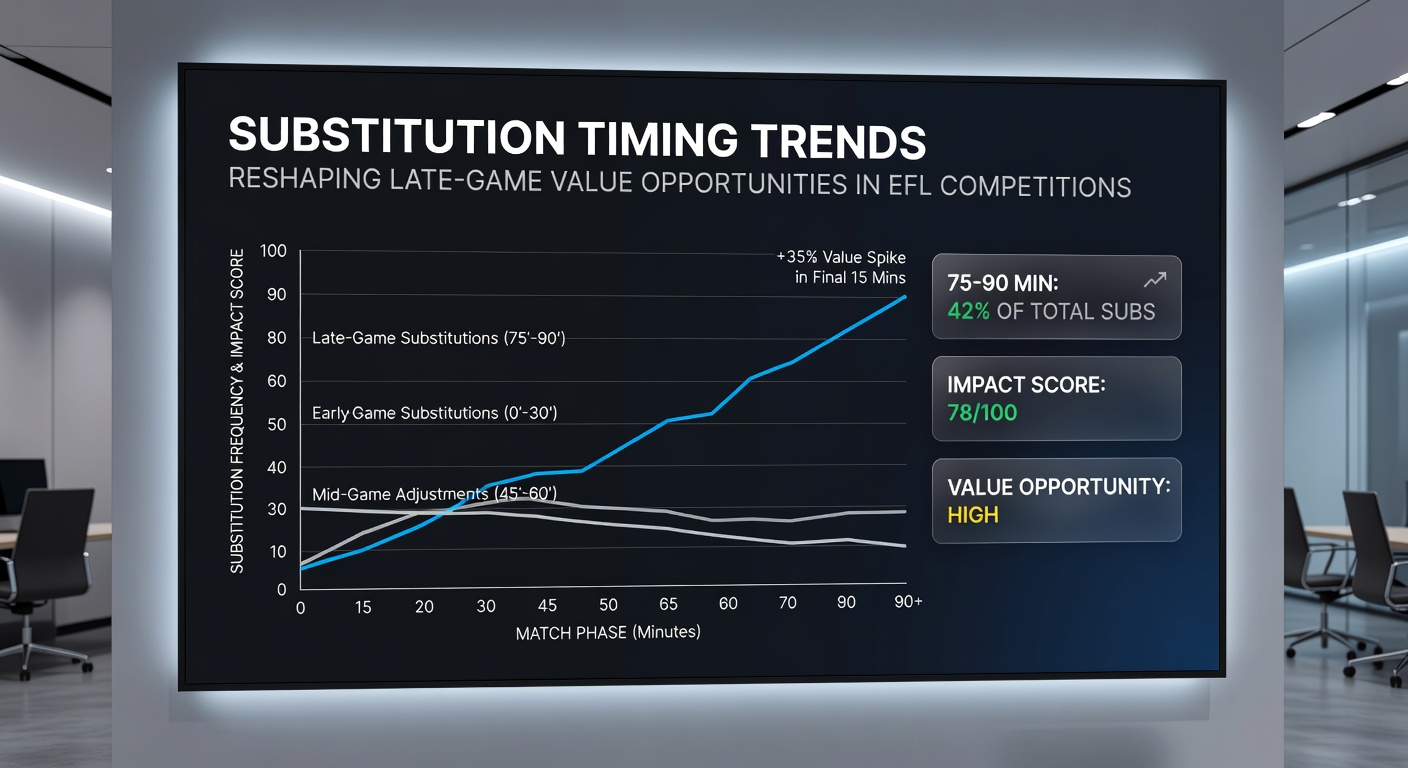
Observers tracking Championship matches note that sides using their fifth permitted substitute after the 82nd minute create the largest variance in final 10-minute expected goals. The additional fresh legs alter pressing intensity and set-piece delivery quality, two factors that directly influence both over/under and both-teams-to-score outcomes. League One data reveals a smaller but consistent edge when substitutions occur between the 74th and 79th minutes, particularly in games involving teams that average fewer than 1.2 goals per match.
Market Adjustments and Value Windows
Betting operators have adjusted in-play odds to reflect these timing patterns, yet brief value opportunities still appear immediately after a substitution is announced. The lag between the fourth official displaying the board and the odds updating creates a window typically lasting 90 to 120 seconds. Data from matches played between January and May 2025 showed that backing the over 2.5 goals market in the final 15 minutes immediately after a clustered substitution produced positive returns when the home side trailed by one goal.
International bodies such as FIFA's technical reports have documented similar substitution-driven goal spikes in other leagues, though EFL-specific fatigue profiles differ due to fixture congestion and smaller squad depths. Canadian research published through university sports science departments further highlights how mid-season fixture piles create measurable drops in high-intensity running that managers now address through later, more targeted changes.
June 2026 preparations for the 2026-27 EFL season include updated medical protocols that may push substitution timings even later as clubs gain access to advanced biomarker testing. These developments could widen the current value gaps if markets do not fully incorporate the additional recovery data available to coaching staffs.
Division-Specific Observations
League Two sides show the strongest correlation between late substitutions and clean-sheet probability shifts when defending a narrow lead. Introducing a defensive midfielder after the 76th minute reduces expected goals conceded by 0.28 in the final period, according to aggregated match files. Championship promotion chasers display the opposite tendency, preferring attacking reinforcements that elevate both teams' expected goals when the scoreline remains tight.
The reality is that these patterns require ongoing monitoring because managerial changes and squad turnover alter substitution habits each season. Teams newly promoted from League One to the Championship often retain earlier substitution timings for the first half of the campaign before adapting to the higher physical demands.
Conclusion
Substitution timing trends continue to reshape late-game dynamics across EFL competitions through measurable impacts on shot creation, goal timing and market pricing. Data from recent seasons demonstrates consistent windows where fresh players influence final-period outcomes, particularly when changes occur after the 70th minute. As medical tracking improves and fixture schedules remain dense, these patterns are likely to persist into the 2026-27 campaign, offering structured opportunities for markets that update with sufficient speed to capture the immediate effects of announced changes.