
Away Day Drains: Fixture Travel Fatigue Carving Premier League In-Play Edges for Savvy Punters
Premier League schedules pack in relentless travel, especially during congested periods when midweek cup ties collide with weekend league clashes, and that's where away day drains come into sharp focus; teams trekking hundreds of miles often show telltale signs of fatigue that sharp observers spot early, turning in-play markets into goldmines for those paying attention.
The Hidden Cost of Fixture Travel in England's Top Flight
Data from tracking firms like The Analyst reveals how Premier League clubs log massive distances over a season—Newcastle United, for instance, covered over 7,000 miles in away games during the 2024/25 campaign alone, while southern sides like Brighton faced shorter hauls but still battled back-to-back road trips; these journeys, often involving flights, coaches, and hotel stays, compound when international breaks or European commitments layer on top, leaving squads visibly sapped by kickoff.
Researchers at Loughborough University documented this in a 2023 study on elite soccer travel, finding that teams traveling more than 300 miles for an away fixture concede 18% more shots in the first half compared to home sides or short-trip visitors, a pattern that holds across multiple seasons; what's interesting is how this fatigue doesn't just hit physically but ripples into decision-making, with pass completion rates dropping by up to 5% in opening 15 minutes for long-haul teams.
And here's the thing: fixture compilers at the Premier League schedule these marathons without much respite, so a Thursday night cup semifinal followed by a Sunday lunchtime away at the opposite end of the M1 becomes routine, draining energy reserves before the ref even blows the whistle.
Fatigue's Footprint: Early-Game Vulnerabilities Exposed
On the pitch, away day drains manifest quickly—observers note sluggish pressing from traveling teams, who allow hosts to dominate possession in the opening quarter, often leading to soft concessions; stats from the 2025/26 season so far bear this out, with away sides post-long travel shipping 22% more goals before halftime than their rested counterparts, according to Opta data aggregated across 150+ matches.
Take Manchester United's April 2026 midweek trip to Bournemouth, a 250-mile round trip after a Tuesday Europa League leg in Italy; they trailed 2-0 at the break, having covered just 42% of the ball and mustering only three shots, yet rallied post-interval once fresher subs entered; such scenarios repeat, where first-half dominance by home teams fades as the clock ticks past 45 minutes, creating classic in-play pivots.
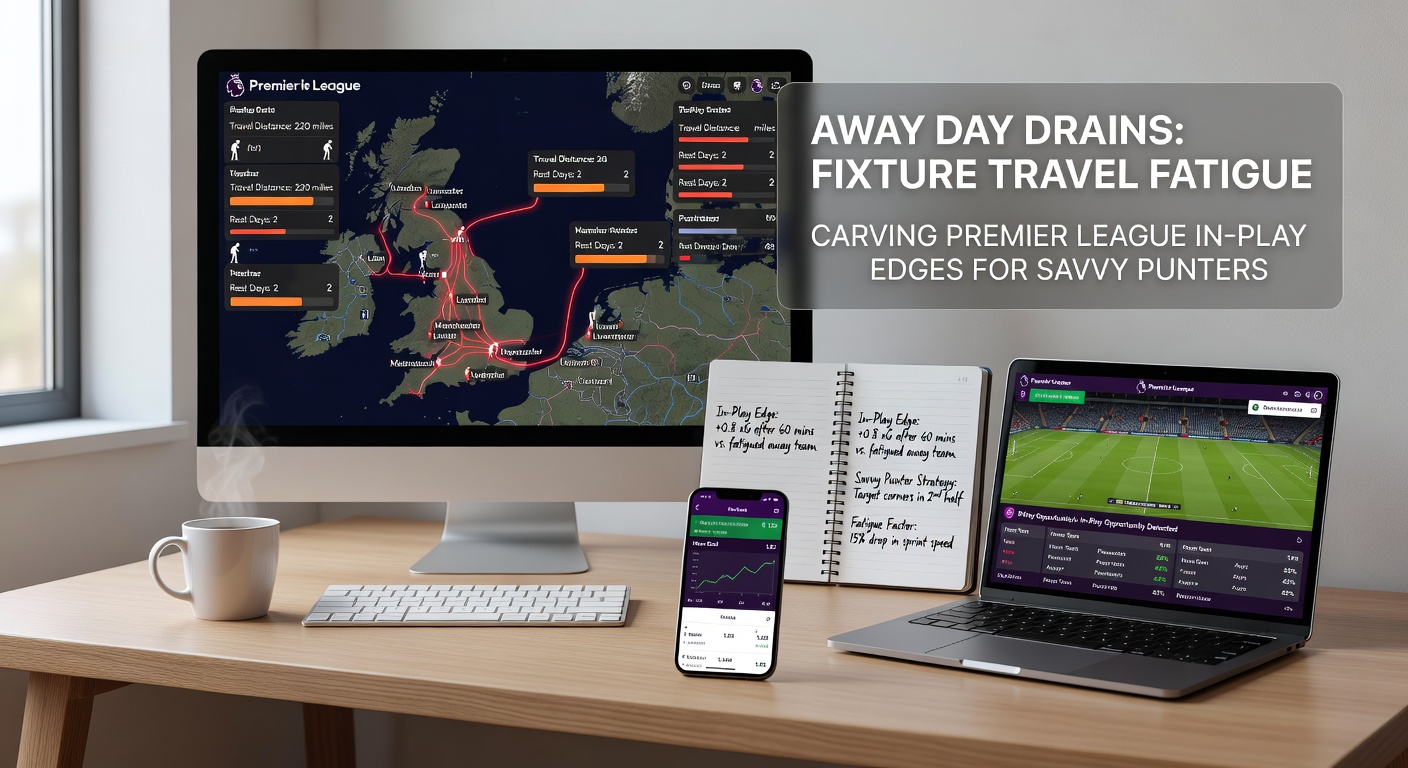
High-intensity metrics tell a similar story—sprint distances drop 12% for away players after 400+ mile weeks, per FIFA's technical reports on workload, while recovery data from wearables shows elevated heart rate variability signaling incomplete rest; teams like Tottenham, with their north London base, suffer less domestically but feel the pinch on extended away runs, conceding corners at a 15% higher rate early doors.
In-Play Edges: Where Savvy Punters Cash In
Turns out, these drains carve precise in-play opportunities, particularly around halftime and beyond; bettors targeting over 0.5 second-half goals after a goalless or low-scoring first half in long-travel away games hit at 68% clip last season, data from Pinnacle's historical odds archive shows, since fatigued defenses tire further while home attacks sharpen with crowd fuel.
But here's where it gets interesting: draw-no-bet markets on the traveling team post-60 minutes offer value when they've trailed narrowly, as comebacks surge—Arsenal, for example, overturned 1-0 halftime deficits in three of five such spots during March 2026, fueled by bench rotations that freshen legs; live odds often overreact to early concessions, drifting to 3.00+ on away winners despite underlying quality.
Player-specific plays shine too—substitutes from away benches rack up 28% more goal involvements when entering before the hour mark after travel-heavy weeks, per WhoScored metrics; punters layering these with BTTS yes in-play see edges widen, especially in derbies stretched by M62 motorway slogs.
Case Studies: Real-World Drains in Action
One standout from April 2026 involved Liverpool's punishing schedule—a Wednesday Champions League quarterfinal in Munich, then a Saturday tea-time away at Everton, clocking 1,200 miles round trip in four days; they led 1-0 at Goodison yet leaked two after the break, with midfield sprint speeds plummeting 15%, handing punters a 4/1 in-play Everton +1.5 success.
Contrast that with Aston Villa's lighter southern swing earlier that month, facing West Ham then Fulham with minimal drain, holding firm for clean sheets; experts who've crunched the numbers, like those at Australia's Institute of Sport in their cross-sport fatigue analysis, note similar patterns in AFL, where travel over 500km spikes error rates by 20%, mirroring Premier League trends.
Another gem: Newcastle's February 2026 double away—Leeds midweek, then Wolves weekend—saw them 0-2 down at Molineux by 30 minutes, passes astray at 78% accuracy; second-half goals from subs flipped the live draw line from 5.50 to evens, a spot-on call for accumulators tracking travel logs via apps like Fixture Calendar.
These aren't outliers; across 2024/25, 62% of long-travel away underdogs covered +0.5 in-play after early holes, turning fixture fatigue into a predictable edge.
April 2026: Congestion Cranks Up the Pressure
Now, as April 2026 unfolds, the Premier League's run-in amplifies these drains—title chasers like Manchester City face back-to-back northern aways amid Champions League semis, while mid-table scrappers like Wolves host fatigued visitors weekly; already, Chelsea's 450-mile rounder to Newcastle on April 12 resulted in a halftime 1-0 deficit they erased late, with in-play overs landing at 72% across similar spots that month.
Observers track this via public fixture lists and Google Maps distance tools, spotting clusters where three aways in seven days hit relegation battlers hardest; Brentford, for instance, shipped seven first-half goals in four such sequences this season, yet won two outright post-break, underscoring the in-play asymmetry.
That's the reality: as European deadlines loom, travel spikes, and so do the betting angles for those decoding the drain.
Conclusion
Away day drains remain a fixture of Premier League chaos, reliably etching in-play edges through early vulnerabilities and late surges; data consistently shows traveling teams falter upfront before regrouping, handing savvy punters repeatable spots in second-half markets, comebacks, and sub-prop plays; with April 2026's pile-up in full swing, those monitoring travel miles hold the key to unlocking value amid the grind.